
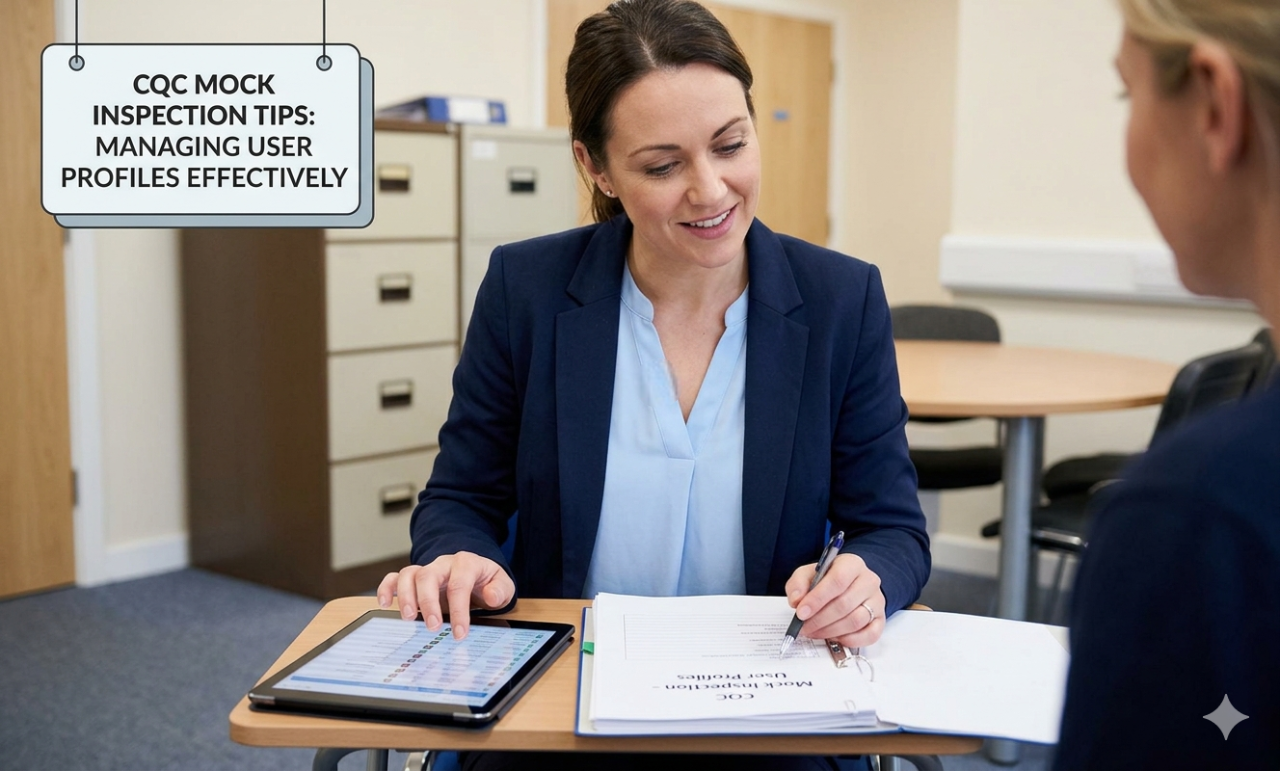
CQC Mock Inspection Tips: Managing User Profiles Effectively
March 17, 2026 |
CQC Mock Inspection is a critical exercise for dental practices to ensure they meet regulatory standards. These simulations closely replicate a Care Quality Commission inspection, enabling teams to verify compliance and identify specific areas for improvement.
Care Quality Commission (CQC) is the agency that regulates the healthcare providers in England in order to maintain the safety of the services provided, their effectiveness, responsiveness, care, and leadership.
Since inspections may be conducted on short notice, dental practices should have everything in place, with operational processes being clear and well-organised at all times. Staff management is one of the main areas that can be inspected by the inspectors, such as documentation, responsibilities and training history.
Here, User Profile management is important. Well-maintained staff profiles are useful in showing accountability, staff competency and organisational transparency, which largely determine the outcome of an inspection.
Understanding What a CQC Mock Inspection Involves
CQC Mock Inspection is basically a practice-based run that is used to enable the healthcare providers to prepare towards the actual process of the inspection. Such tests are carried out in the same format as official inspectors and are aimed at assessing adherence to the standards of regulation.
Items that are usually reviewed by practices during a mock inspection include:
- Staff qualifications and training records
- Compliance policies and procedures
- Risk assessments and safety protocols
- Governance and leadership processes
- Secure documentation
This exercise is aimed at detecting the compliance gaps, at the same time enhancing the confidence of the staff and making sure that everyone is familiar with the process of the inspections.
Mock inspections also enable teams to rectify problems prior to them becoming severe compliance risks.
Why Staff and User Profile Management Matters in Inspections
In a CQC Mock Inspection, the inspectors frequently examine the staff documents and ask questions to the team members concerning their duties in the practice.
An updated User Profile on every employee will help illustrate:
- Staff competence and qualifications
- Up-to-date training records
- Clear responsibilities within the organisation
- Accountability in daily operations
- With these records structured and readily available, it is easy to have practiceswhich can rapidly bring the evidence that they are complying with regulatory requirements.
Conversely, unfinished or unstructured personnel data may cause some doubt regarding leadership and governance.
Keeping orderly user accounts means that all the roles and training statuses of each team member are well recorded in terms of compliance.
Common Problems Dental Practices Face During Mock Inspections
Even dental practices that are well managed may face difficulties in preparing for a CQC Mock Inspection.
Disorganised Staff Records
Lots of practices keep staff records in spreadsheets, large files and various databases. This renders the retrieval of information in inspection time-consuming.
Missing Training Documentation
The compliance depends on training and certification records. In case such records are incomplete or old, it can be a hint of the lack of competency management among staff.
Unclear Responsibilities
In case employees do not trust the duties they are expected to perform, it might imply the presence of ineffective governance frameworks.
Last-Minute Preparation
In the absence of formal systems, it leads to practices that are in a hurry to collect papers just before the inspections.
These problems may precondition the emergence of unwarranted stress and the possibility of non-compliance.
Best Practices for Managing User Profiles Before a CQC Mock Inspection
One of the easiest methods of enhancing the inspection preparedness is through managing staff User Profiles.
Keep Staff Records Updated
All the staff members are to possess a full-fledged profile comprising details of employment, job description, and contact details. These records should also be updated continuously so that the documentation is also correct.
Assign Clear Roles and Responsibilities
This is evident through the clear definition of staff roles, which is a sign of good leadership and governance in the practice. All the team members must be aware of their tasks and their contribution towards compliance.
Track Training and Certifications
Resumes should consist of courses taken, certifications, and CPD activities. Reviewing these records can be used to make sure that staff are up to professional standards and regulatory expectations.
Maintain Organised Documentation
The records of policies, certificates, and compliance must be in an organised manner. Inspections are much less stressful when it is easy to find the documents.
How Digital Compliance Systems Improve User Profile Management
With the more intricate compliance requirements, most dental practices are resorting to the use of digital tools to make documentation management easy.
Digital compliance systems are beneficial in practice:
- Maintain structured User Profiles for every staff member.
- Track training and certification updates automatically
- Store policies and compliance documents in one location
- Generate reports quickly during inspections.Practice managers are able to get immediate access to staff information rather than browsing through several files.
This degree of organisation enhances efficiency and assists in making sure that the practice is inspection-ready.
Building a Compliance-Ready Dental Practice
Compliance also cannot be done as a one-time preparation for inspections. Rather, it ought to be incorporated into the day-to-day practice management.
The frequent CQC Mock Inspections will motivate the teams to check their processes, identify their weak points, and rectify them.
Through proper User Profiles, recording of staff training and arranging compliance documentation, practices can develop a culture of responsibility and openness.
In cases where compliance is incorporated into the day-to-day operations, inspections are much less stressful and much more predictable.
Conclusion
Simulating a CQC Mock Inspection is a crucial measure to stay in regulatory compliance and provide high-quality care.
The management of the User Profiles is one of the most active methods to increase inspection preparedness. Maintaining records of staff, recording of responsibilities and monitoring of training assist practices in depicting good governance and accountability.
We know that compliance management is one of the most difficult tasks in dental teams at Denttrack. Our platform assists practices in structuring staff profiles, compliance documentation, and being ready to undergo an inspection in one platform.
In case you are preparing your practice to undergo the next inspection, you can find ways to make the process much easier by considering tools that will ease compliance and manage your team.
Frequently Asked Questions
1. What is a CQC Mock Inspection?
A CQC Mock Inspection is a self-funded or external audit, which mimics an actual Care Quality Commission inspection. It assists healthcare providers in spotting areas of non-compliance and being ready to be inspected by the officials.
2. Why are CQC Mock Inspections important for dental practices?
Mock inspections enable practices to test their compliance procedures, recognise the areas of weakness and rectify the failures before a formal inspection by the regulators.
3. What is a User Profile in dental practice management?
User Profile is an electronic or written document that has the information of a staff member, duties, training logs and their job description in the practice.
4. What documents are commonly reviewed during CQC inspections?
The inspectors tend to review staff training records, compliance policy, risk assessment, governance documentation, and safety procedures.
5. How can digital systems help with CQC compliance?
Digital systems provide assistance to practices to organise documentation, store staff records, training, and access information promptly, as needed during inspections.