
The Future of Dental Practice Management Software: AI, Automation and Compliance
August 17, 2026 |
Dental practices are becoming increasingly dependent on technology to manage the growing demands of modern healthcare. From workforce administration and compliance to documentation and daily operations, practice managers now have more responsibilities to coordinate than ever before. As these demands increase, traditional manual processes can make everyday management complicated.
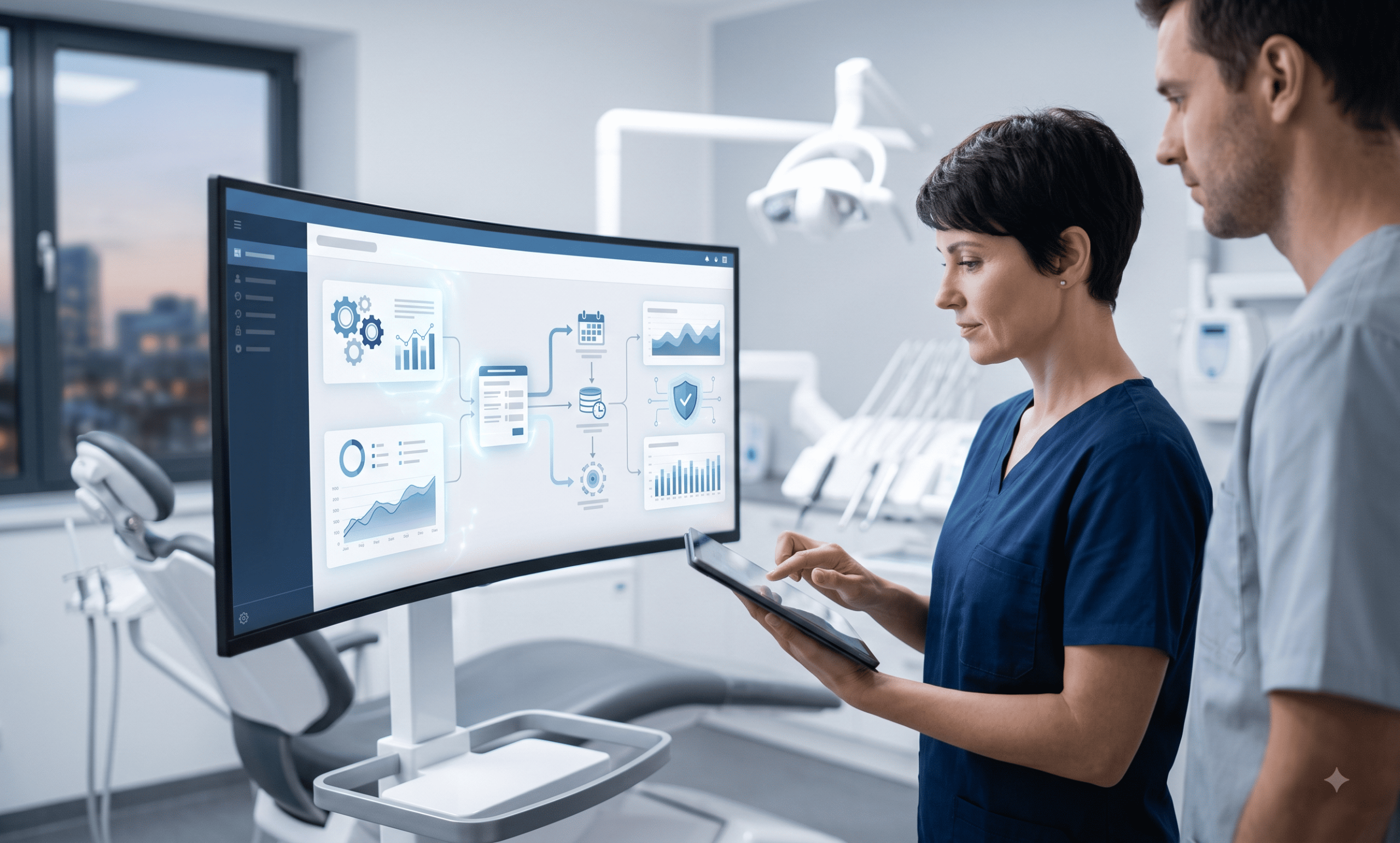
The next generation of dental practice management software is reshaping this landscape by integrating artificial intelligence, automation, and compliance management into more connected digital environments. Instead of simply storing information, modern systems are becoming tools that help managers make better decisions, reduce repetitive work, and maintain greater control over practice operations.
How AI Is Changing Practice Management
AI continues to be a growing force in the healthcare industry, transforming everyday business processes. In dental offices, it can be used in administration and management as well as in the clinic.
AI can be used in systems to detect patterns, sort information and assist managers in everyday operational decisions. Technology should not be used to replace human judgment, but it can be employed to save time by teams completing repetitive administrative tasks.
Where AI Can Add Value
Future-oriented systems can assist practices in the following ways:
- Identifying administrative patterns
- Highlighting incomplete information
- Supporting workflow management
- Enhancing reporting and visibility
- Minimising repetitive administrative work
This frees managers to focus more time on activities that require human judgment, leadership, and strategic planning.
Automation Can Reduce Everyday Workload
In a dental office, administrative tasks can be eaten up a lot of time. As teams expand, record keeping, tracking tasks, tracking requirements, and follow up can become quite the challenge.
This can be mitigated by using automation to enable routine processes to be carried out with less manual intervention.
For instance, automated reminders can keep teams on track when it comes to outstanding requirements, and digital workflows simplify tracking if key tasks have been finished. These seemingly minute efficiency gains can have a huge impact on productivity in the workday.
The Growing Importance of Dental HR Management
Maintaining employee records is not the only responsibility of managing a dental workforce. Additional management responsibilities include training, attendance, documentation, or ongoing training and development.
This is why dental HR management is a more crucial aspect of practice operations in the present day. Digital systems can offer enhanced visibility across workforce information along with lessening the need for numerous disconnected records.
Benefits for Practice Managers
An organised system in workforce management can assist in:
- Employee documentation
- Training record management
- Staff performance monitoring
- Attendance tracking
- Compliance-related workforce requirements
Functions that are organised in a single environment will facilitate management as practices grow.
Compliance Will Become More Connected
In compliance, technology will play a larger role as technology improves compliance and streamlines processes. Technology will play a greater role with compliance as well, as technology improves compliance and streamlines processes. Practices must keep policies, records of training, audits, risk assessments, and other paperwork for the entire year.
Future systems will become more integrated in bringing these together rather than administrative tasks in isolation. This can provide managers with a better understanding of what has already been accomplished, what still needs to be done, and where there might be opportunities to fill in the gaps.
Practices will move towards a more proactive approach instead of preparing documents when an inspection is imminent, by incorporating compliance into their daily workflows.
What the Future Could Look Like
The future of Dental Practice Management Software will most likely revolve around integration instead of standalone functionalities. It can help with decision making, automate repetitive tasks, and enhance compliance monitoring with digital tools.
These technologies can combine to provide a more integrated working environment, providing managers with relevant information without having to spend valuable time trawling through individual systems.
But technology can’t be used to replace the need to have a good old-fashioned pen and paper, it’s just a way to help. Good practice management will rely on effective leadership, professional judgement, and clear processes which will remain crucial.
Preparing for the Next Generation of Practice Management
Not all new technologies are necessarily new to dental practices. Instead, managers should be concerned with solutions that offer value and solutions that solve real operational problems.
The following points should be kept in mind when planning for the future:
- Practical automation
- Secure information management
- Clear compliance visibility
- Workforce organisation
- Scalable technology
By integrating with this broader digital approach, Modern Dental HR Management solutions can play a role in managing your practice staff and fostering a more efficient workflow.
Conclusion
The future of dental practice management will be shaped by the combination of technology and human expertise. AI can provide greater insight, automation can reduce repetitive workloads, and integrated compliance tools can help practices maintain stronger oversight.
By adopting the right Dental Practice Management Software, Denttrack helps modern dental practices create more organised workflows, improve operational visibility, and prepare for a future where smarter technology plays an increasingly important role in everyday management.
FAQs
Will AI replace dental practice managers?
No. AI can support administrative and analytical tasks, but leadership, decision-making, and human judgement remain essential.
Can automation work alongside existing practice processes?
Yes. Automation can be introduced gradually to improve specific workflows without completely changing how a practice operates.
Why is integrated technology becoming important for dental practices?
Integrated systems can reduce disconnected processes and give managers clearer visibility across workforce, compliance, and operational activities.