
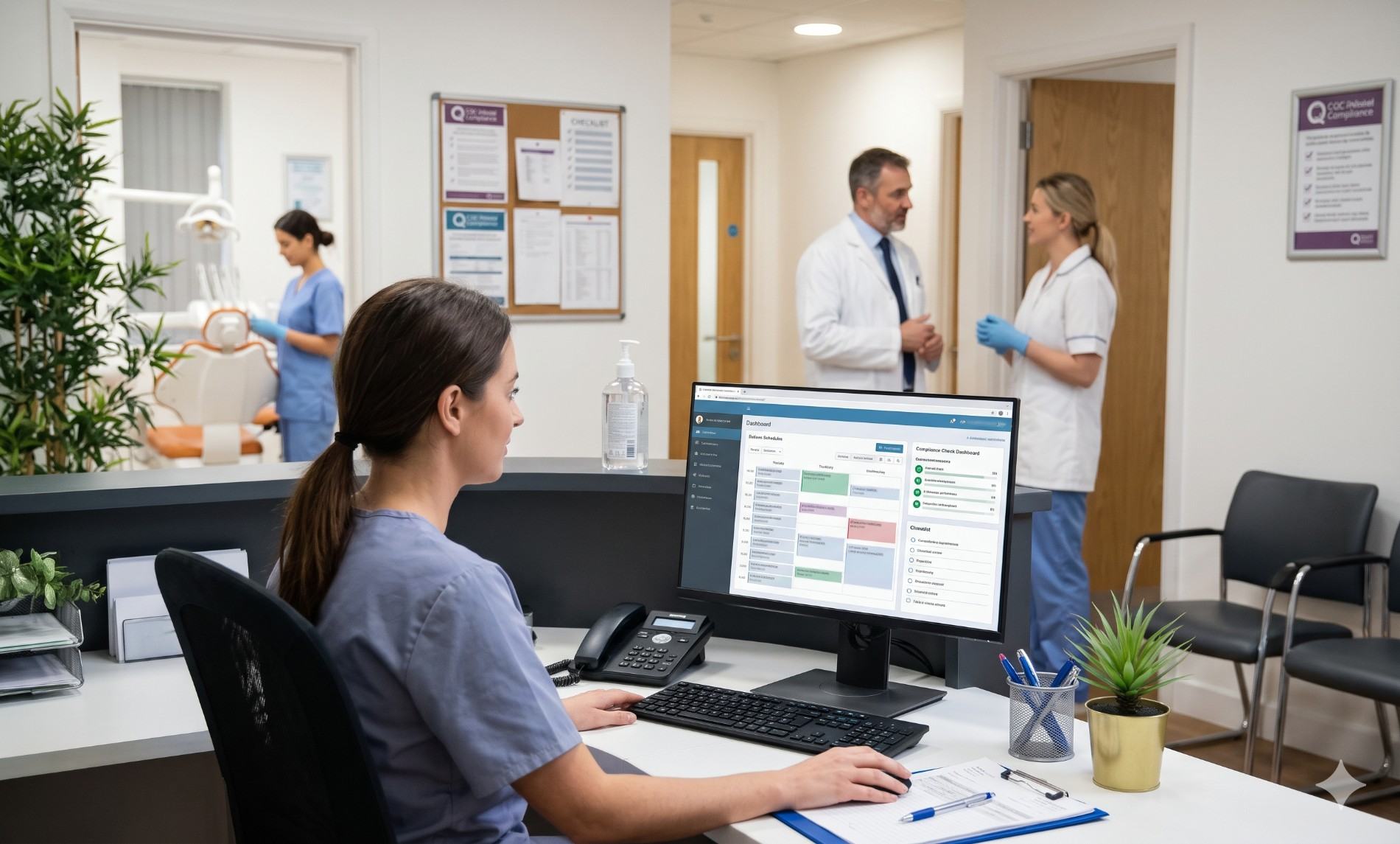
Dental Clinic Practice Management Software for Better CQC Compliance
October 26, 2026 |
Managing a dental clinic involves balancing daily operations with the responsibility of maintaining appropriate standards of care, safety, and documentation. From staff training records to policies, audits and risk assessments, practice managers need reliable processes to keep essential information organised and accessible.
When these responsibilities are handled through disconnected files and manual reminders, important tasks can become harder to monitor. The right digital tools can help practices organise their workflows and maintain better oversight of compliance-related activities.
Dental Clinic Practice Management Software can support this process by bringing key administrative functions into a more structured environment, helping teams manage their responsibilities more consistently.
Why CQC Compliance Matters for Dental Practices
In the UK, the Care Quality Commission (CQC) is responsible for regulating health and social care services, including dental services. Registered providers are required to comply with the relevant regulations and show that their services are properly managed.
Compliance is not just about documents in advance of an inspection. Practices should have systems in place to keep records, identify risks, review procedures, and identify areas for improvement.
These responsibilities can become challenging when information is scattered across spreadsheets, paper files and separate systems. A systematic digital method can help to keep track of tasks and uncover any uncompleted actions before they turn into bigger administrative issues.
How Practice Management Software Supports Compliance
Everyday tasks can be streamlined, and information organised with the help of a practice management platform. All the capabilities are not the same for all providers, so practices should evaluate individual capabilities before choosing a solution.
- Organised Documentation and Records
It is important to keep current policies, procedures and supporting documents to ensure effective practice management. Digital document management can assist teams to organise information, find relevant documents and review documents when they need to be updated.
Organisation also allows authorised staff to access information without having to trawl through a number of folders.
- Staff Training and Development Records
It is important for dental teams to be aware of their duties. Maintaining appropriate records of training and development can assist managers in tracking completion, determining training needs and scheduling subsequent training.
These records can be maintained more easily in a digital system, but managers need to make sure that the information is accurate and reflects the actual training activities of the practice.
- Audit and Task Monitoring
Routine audits and checks can be used to review processes and identify areas for improvement. Managers can use software that tracks tasks and schedules them to assign tasks, keep track of deadlines, and document progress.
This provides a better overview of what has been done and what is still to be done.
The Role of CQC Compliance Software
CQC Compliance Software is designed to specifically organise and track compliance related activities. Depending on the practice, it may include policy management, audit tracking, risk assessments, action plans and inspection preparation tools.
There are general practice management systems that will help with administrative tasks, but there are also specific compliance systems that can help you keep track of compliance requirements.
The two approaches do not necessarily exclude each other. Depending on the practices, some may have an integrated platform for both, and others may need to have two different systems to achieve their operational requirements.
This will depend on the size of the clinic, the processes in place and the compliance standards.
Benefits of a More Connected Digital Approach
If administrative and compliance procedures are streamlined properly, the practice manager can have a clearer overview of all the tasks they are responsible for.
Potential benefits include:
- Less duplicated administration: Organised records can reduce repeated data entry and unnecessary searches.
- Clearer accountability: Assigned tasks make it easier to identify responsibilities and follow up on outstanding work.
- Improved oversight: Managers can review records, deadlines and actions in a more structured way.
- Consistent processes: Standardised workflows can help staff follow established procedures.
- Better preparation: Maintaining documentation throughout the year can reduce the pressure of last-minute inspection preparation.
The benefits are dependent upon the configuration and use of the software. Compliance management is enabled by technology, but it does not ensure that a practice is compliant with all regulations.
Choosing the Right Software for Your Clinic
It is important to understand your existing processes and understand where you are having the biggest challenges before investing in a digital platform. Think about document management, training records for staff, scheduling audits, tracking risks, and more.
Also assess ease of use, reporting capabilities, staff access controls, customer support and integration with your existing systems. A platform should facilitate the team’s actual workflow and not add unnecessary complexity.
Denttrack provides digital solutions that help dental practice management and compliance processes. A clinic audit can be helpful in deciding what functions would be beneficial for the organisation and control of your clinic.
Conclusion
Effective CQC compliance requires consistent processes, accurate documentation, and clear responsibility across the dental team. Dental Clinic Practice Management Software can help organise administrative workflows, maintain records and monitor important tasks, while CQC Compliance Software may offer more specialised compliance management capabilities.
By choosing tools that match their requirements and reviewing compliance activities regularly, dental practices can build more organised processes and support continuous improvement. Software should remain part of a wider approach that includes staff training, appropriate oversight and a commitment to meeting applicable standards.
FAQs
Can practice management software help prepare for a CQC inspection?
Yes, depending on its features, it can help organise documentation and track relevant tasks before an inspection.
Is dedicated CQC software necessary for every dental clinic?
Not always, the decision depends on the clinic’s needs, existing systems and the compliance features already available.
Does using compliance software guarantee CQC compliance?
No, software can support record-keeping and monitoring, but the practice remains responsible for meeting applicable requirements.